
How’s your oral health? Did you know it can change as frequently as any other aspect of your health and many factors, including stress, medical conditions, and a poor oral hygiene routine can contribute to an unhealthy mouth.
Understanding the early warning signs of poor oral hygiene is crucial for maintaining your overall health, and if you’re concerned about tooth decay, check out how you can avoid tooth decay for proven prevention strategies that can protect your smile.
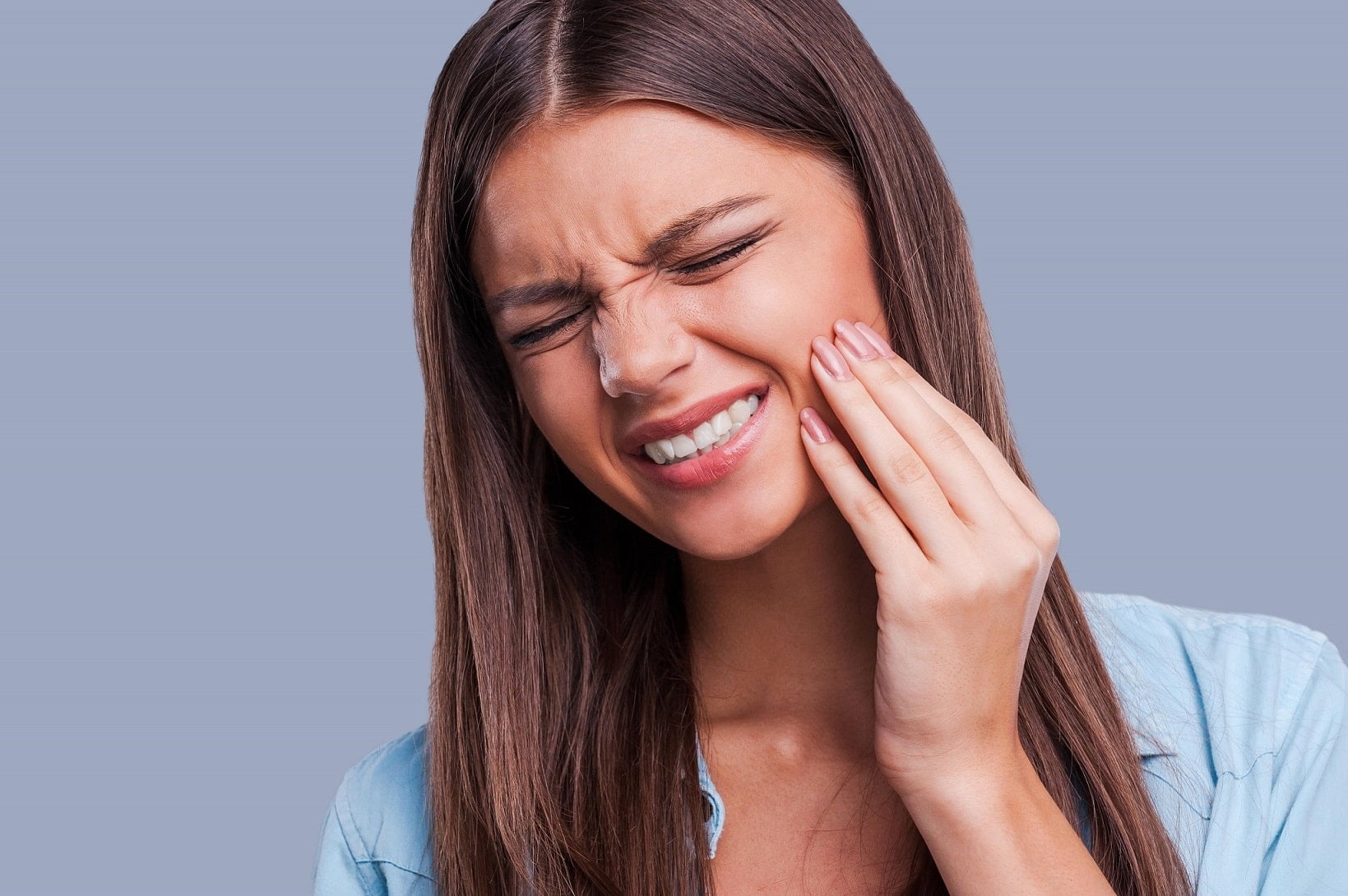
What is Poor Oral Hygiene?
Poor oral hygiene happens when regular care of your teeth and gums is neglected. This includes skipping brushing, not flossing, missing dental check-ups, or having habits that encourage plaque and bacteria to build up. Over time, these habits can lead to tooth decay, gum inflammation, bad breath, and even infections that affect your overall health.
By recognising the early signs and taking steps to improve your daily routine, you can prevent serious dental problems and enjoy a healthier, brighter smile.
So, what are the signs of bad oral hygiene? And what should you do about it?
7 Signs and Symptoms of Poor Oral Hygiene
Although everyone’s oral health is different, there are several common signs and symptoms of poor oral hygiene that you shouldn’t ignore. Recognising these early can help you take action before they lead to more serious dental problems.
1. Bad Breath
Bad breath can happen for two main reasons. The most common reason is from a buildup of bacteria in the mouth, usually plaque bacteria left behind from poor dental care. However, bad breath could also be due to gum disease.
2. Bleeding Gums
If your gums bleed whenever you brush or floss, you should take this as a warning sign see a Townsville dentist and book an appointment as soon as possible. The bleeding happens because your gums are inflamed, and could be due to either poor oral hygiene, or a gap in your immune system.
3. Canker Sores
Canker sores and cold sores can affect healthy mouths, but you’ll begin to notice more of them if you have poor oral health. If you have large, frequent, or painful sores, it’s important to address this with your dentist as soon as possible.
4. Dryness
Dry mouth often occurs in tandem with other symptoms, since it isn’t directly caused by poor oral hygiene. Dryness in the mouth can contribute to other oral health problems, or could be an indication of the presence of other problems, such as dietary shortcomings.
5. Thrush
If declining oral health is left untreated, it can cause oral infections, such as thrush, to develop. These infections most often occur in children, older adults, and those with weakened immune systems. Thrush manifests as white, raised lesions on the soft tissues in the mouth.
6.Tooth decay
Tooth decay occurs when bacteria in the mouth produce acids that erode tooth enamel. It often leads to cavities, tooth sensitivity, and pain if left untreated. Poor brushing, high sugar intake, and missed dental visits are the main culprits.
7.Gum disease
Gum disease starts with inflammation and bleeding gums but can progress to serious infection that damages the bone supporting your teeth. Without treatment, it can cause loose teeth or even tooth loss.
There are also other general health problems that have been linked to poor oral hygiene, including diabetes, cancer, rheumatoid arthritis, osteoporosis, and dementia. With a solid oral health routine, you can prevent any dental issues from happening, and keep your teeth in the best condition possible.
How To Improve Oral Hygiene?
If you’ve noticed any of these issues with your oral health, you should take immediate action to ensure there are no further negative effects of poor oral hygiene. Here are some tips on how to have perfect oral hygiene.
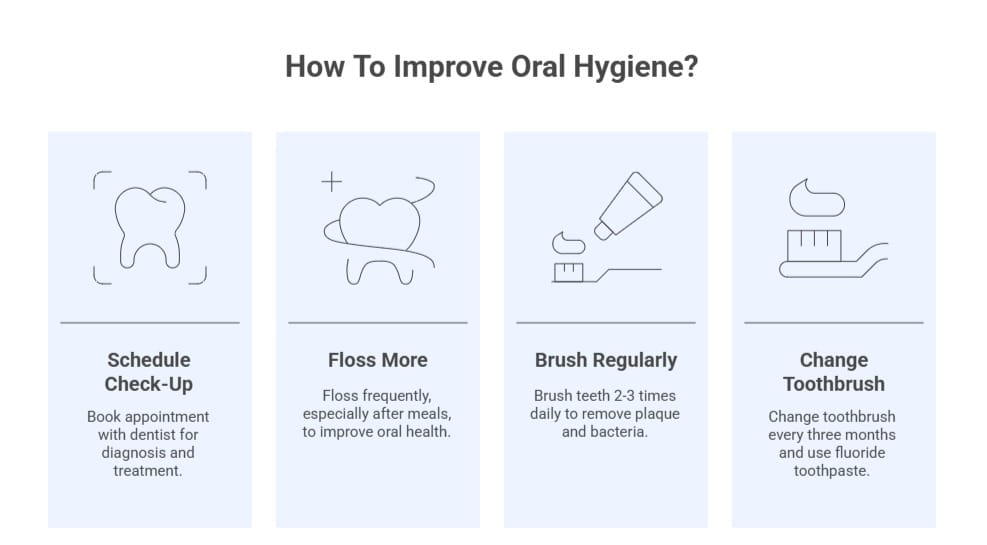
1. Schedule a Check-Up and Clean
Poor oral hygiene can happen for a wide range of reasons, so it’s incredibly important to book an appointment with our family dentist in Townsville, who will be able to diagnose the problem, as well as provide you with the appropriate treatment.
2. Change Your Toothbrush and Toothpaste
Our oral hygienist in Townsville will be able to recommend you the perfect toothbrush and toothpaste for you. You should change your toothbrush at least every three months, as well as use a toothbrush that includes fluoride, as this will help protect your teeth.
3. Floss More
Flossing is an incredibly important part of everyone’s oral hygiene routine, but you may not be flossnig as much as you should be. If you’re working on improving your oral health, it is a good idea to begin flossing more frequently, specifically after meals.
4. Brush your teeth 2–3 times daily
Regular brushing helps remove plaque, food particles, and bacteria that build up between your teeth and gums, reducing your risk of tooth decay and gum disease.
Why Choose Deeragun Dental Clinic?
If you’re looking for a dentist in Townsville, Deeragun Dental is here for you. We are dedicated to our patients having a comfortable dental experience, so you can rest assured that we have you and your families best interests at heart. Our dentist will work with you to diagnose, and resolve your oral concerns.
Our Townsville Dental Clinic offers a range of dental services and wants to ensure that good oral health is accessible to more people, which is why we have a range of payment plans, including zippay and afterpay available. To discuss our payment options you can contact us online or visit us.
Deeragun Dental Townsville Home Of Dentistry
Deeragun Dental Shop 2, 12 Deeragun Road Deeragun, Townsville QLD 4818
07 4751 5999
Book an appointment
FAQs About Oral Hygiene
Poor oral health is usually caused by neglecting daily dental care, such as brushing and flossing inconsistently or incorrectly, and skipping regular dental check-ups. Other contributing factors include a high-sugar diet, smoking, stress, certain medications, and underlying medical conditions. Even minor lapses in oral care over time can lead to plaque buildup, tooth decay, and gum problems.
Signs of poor oral hygiene include persistent bad breath, bleeding or inflamed gums, frequent canker sores, dry mouth, visible plaque, tooth decay, and gum disease. Paying attention to these early warning signs and scheduling a dental check-up can help prevent more serious problems.
Yes, poor oral hygiene can affect more than just your teeth. It can lead to gum disease, tooth loss, and infections in the mouth. Studies also link chronic oral health issues to other conditions such as diabetes, heart disease, rheumatoid arthritis, osteoporosis, and even cognitive decline. Maintaining good oral care is essential for overall health and wellbeing.
In many cases, the effects of poor oral hygiene can be improved or reversed if addressed early. Plaque and tartar buildup can be removed with professional cleaning, cavities can be treated, and gum inflammation can be managed. With consistent at-home care and regular dental visits, it is possible to restore your oral health and prevent further damage.